Sunday, November 22, 2015

Comparing the Stoics with Bashō and Krishna

Marcus Aurelius on Mortality and the Key to Living Fully

More from Maria: newsletter@brainpickings.org
“Death is our friend,” Rilke wrote in an exquisite 1923 letter, “precisely because it brings us into absolute and passionate presence with all that is here, that is natural, that is love.” And yet one of the defining features of the human condition is that we long for immortality despite inhabiting a universe governed by impermanence.
Eighteen centuries before Rilke, the great Roman emperor and Stoic philosopher Marcus Aurelius addressed this abiding human paradox of life and death with astonishing lucidity in his Meditations (public library | free ebook) — his indispensable proto-blog, which also gave us the philosophic emperor’s enduring wisdom on how to begin each day for maximum sanity and what his father taught him about honor and humility.
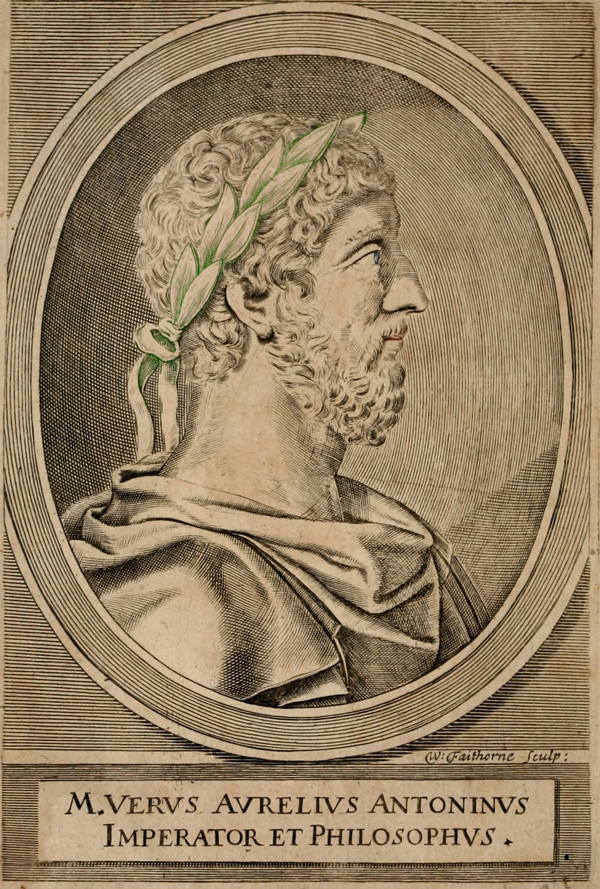
Aurelius, translated here by Gregory Hays, considers how befriending this eternal interplay of life and death can inform and ennoble our existential priorities:
QuoteJust that you do the right thing. The rest doesn’t matter. 
Cold or warm.
Tired or well-rested.
Despised or honored.
Dying … or busy with other assignments. 
Because dying, too, is one of our assignments in life. There as well: “to do what needs doing.”
In another meditation, he revisits the question of our inescapable impermanence:
QuoteSome things are rushing into existence, others out of it. Some of what now exists is already gone. Change and flux constantly remake the world, just as the incessant progression of time remakes eternity. 
We find ourselves in a river. Which of the things around us should we value when none of them can offer a firm foothold? 
Like an attachment to a sparrow: we glimpse it and it’s gone. 
And life itself: like the decoction of blood, the drawing in of air. We expel the power of breathing we drew in at birth (just yesterday or the day before), breathing it out like the air we exhale at each moment.
Art from Candy Chang's project Before I Die
Art from Candy Chang’s project Before I Die
With breath-stopping simplicity, Aurelius crystallizes the inevitable and indiscriminate nature of this inhale-exhale cycle that is life:
QuoteAlexander the Great and his mule driver both died and the same thing happened to both. They were absorbed alike into the life force of the world, or dissolved alike into atoms.
But rather than being dispirited by this awareness, he suggests, we can find it in an enlivening force of moral solidity in the face of our ephemeral existence:
QuoteKeep this constantly in mind: that all sorts of people have died — all professions, all nationalities. Follow the thought all the way down to Philistion, Phoebus, and Origanion. Now extend it to other species. 
We have to go there too, where all of them have already gone: 
… the eloquent and the wise — Heraclitus, Pythagoras, Socrates …
… the heroes of old, the soldiers and kings who followed them …
… the smart, the generous, the hardworking, the cunning, the selfish …
… and even [those] who laughed at the whole brief, fragile business. 
All underground for a long time now. 
And what harm does it do them? Or the others either — the ones whose names we don’t even know?
From this he extracts the ultimate moral:
QuoteThe only thing that isn’t worthless: to live this life out truthfully and rightly. And be patient with those who don’t.
Meditations is a requisite read in its entirety — the kind that stays with you for a lifetime and rewards anew with each rereading. Complement it with Seneca, a fellow Stoic, on how to fill the shortness of life with greater width of aliveness and Bertrand Russell on the paradox of immortality.

Monday, November 2, 2015

Footnotes to McCullers and Chekhov on loving

Philosopher Erich Fromm on the Art of Loving and What Is Keeping Us from Mastering It

(courtesy of Maria's Brainpickings)
"To love without knowing how to love wounds the person we love," the great Zen teacher Thich Nhat Hahn admonished in his terrific treatise on how to love – a sentiment profoundly discomfiting in the context of our cultural mythology, which continually casts love as something that happens to us passively and by chance, something we fall into, something that strikes us arrow-like, rather than a skill attained through the same deliberate practice as any other pursuit of human excellence. Our failure to recognize this skillfulness aspect is perhaps the primary reason why love is so intertwined with frustration.

That's what the great German social psychologist, psychoanalyst, and philosopher Erich Fromm examines in his 1956 masterwork The Art of Loving (public library) – a case for love as as a skill to be honed the way artists apprentice themselves to the work on the way to mastery, demanding of its practitioner both knowledge and effort.

Fromm writes:

This book ... wants to show that love is not a sentiment which can be easily indulged in by anyone, regardless of the level of maturity reached by him. It wants to convince the reader that all his attempts for love are bound to fail, unless he tries most actively to develop his total personality, so as to achieve a productive orientation; that satisfaction in individual love cannot be attained without the capacity to love one’s neighbor, without true humility, courage, faith and discipline. In a culture in which these qualities are rare, the attainment of the capacity to love must remain a rare achievement.

Fromm considers our warped perception of love's necessary yin-yang:

Most people see the problem of love primarily as that of being loved, rather than that of loving, of one’s capacity to love. Hence the problem to them is how to be loved, how to be lovable.

People think that to love is simple, but that to find the right object to love – or to be loved by – is difficult. This attitude has several reasons rooted in the development of modern society. One reason is the great change which occurred in the twentieth century with respect to the choice of a “love object."

Saturday, October 17, 2015

Thoreau and his moral myopia

An excoriating exposé of our paragon of self-reliance, by Kathryn Schulz of the New Yorker...
http://www.newyorker.com/magazine/2015/10/19/pond-scum

On the evening of October 6, 1849, the hundred and twenty people aboard the brig St. John threw a party. The St. John was a so-called famine ship: Boston-bound from Galway, it was filled with passengers fleeing the mass starvation then devastating Ireland. They had been at sea for a month; now, with less than a day’s sail remaining, they celebrated the imminent end of their journey and, they hoped, the beginning of a better life in America. Early the next morning, the ship was caught in a northeaster, driven toward shore, and dashed upon the rocks just outside Cohasset Harbor. Those on deck were swept overboard. Those below deck drowned when the hull smashed open. Within an hour, the ship had broken up entirely. All but nine crew members and roughly a dozen passengers perished.

Two days later, a thirty-two-year-old Massachusetts native, en route from Concord to Cape Cod, got word of the disaster and detoured to Cohasset to see it for himself. When he arrived, fragments of the wreck were scattered across the strand. Those victims who had already washed ashore lay in rough wooden boxes on a nearby hillside. The living were trying to identify the dead—a difficult task, since some of the bodies were bloated from drowning, while others had struck repeatedly against the rocks. Out of sentiment or to save labor, the bodies of children were placed alongside their mothers in the same coffin.

The visitor from Concord, surveying all this, found himself unmoved. “On the whole,” he wrote, “it was not so impressive a scene as I might have expected. If I had found one body cast upon the beach in some lonely place, it would have affected me more. I sympathized rather with the winds and waves, as if to toss and mangle these poor human bodies was the order of the day. If this was the law of Nature, why waste any time in awe or pity?” This impassive witness also had stern words for those who, undone by the tragedy, could no longer enjoy strolling along the beach. Surely, he admonished, “its beauty was enhanced by wrecks like this, and it acquired thus a rarer and sublimer beauty still.”

Saturday, October 10, 2015

Nietzsche on following the narrow road

Maria Popova shares this from her extraordinary Brain Pickings series:

Friedrich Nietzsche, who believed that embracing difficulty is essential for a fulfilling life, considered the journey of self-discovery one of the greatest and most fertile existential difficulties. In 1873, as he was approaching his thirtieth birthday, Nietzsche addressed this perennial question of how we find ourselves and bring forth our gifts in a beautiful essay titled Schopenhauer as Educator (public library), part of his Untimely Meditations.

Nietzsche, translated here by Daniel Pellerin, writes:

Any human being who does not wish to be part of the masses need only stop making things easy for himself. Let him follow his conscience, which calls out to him: "Be yourself! All that you are now doing, thinking, desiring, all that is not you." Every young soul hears this call by day and by night and shudders with excitement at the premonition of that degree of happiness that eternities have prepared for those who will give thought to their true liberation. There is no way to help any soul attain this happiness, however, so long as it remains shackled with the chains of opinion and fear. And how hopeless and meaningless life can become without such a liberation! There is no drearier, sorrier creature in nature than the man who has evaded his own genius and who squints now towards the right, now towards the left, now backwards, now in any direction whatever.

Sunday, September 13, 2015

Finding the meaning of life along the narrow road

There Is No Theory of Everything
CreditTucker Nichols
Over the years, I have had the good fortune to teach a lot of graduate students, mostly in philosophy, and have noticed a recurring fact. Behind every new graduate student stands an undergraduate teacher. This is someone who opened the student’s eyes and ears to the possibility of the life of the mind that they had perhaps imagined but scarcely believed was within their reach. Someone who, through the force of their example, animated a desire to read more, study more and know more. Someone in whom the student heard something fascinating or funny or just downright strange. Someone who heard something significant in what the student said in a way that gave them confidence and self-belief. Such teachers are the often unknown and usually unacknowledged (and underpaid) heroes of the world of higher education.
Some lucky people have several such teachers. This was the case with me. But there is usually one teacher who sticks out and stays in one’s mind, and whose words resound down through the years. These are teachers who become repositories for all sorts of anecdotes, who are fondly recalled through multiple bon mots and jokes told by their former students. It is also very often the case that the really good teachers don’t write or don’t write that much. They are not engaged in “research,” whatever that benighted term means with respect to the humanities. They teach. They talk. Sometimes they even listen and ask questions.
In relation to philosophy, this phenomenon is hardly new. The activity of philosophy begins with Socrates, who didn’t write and about whom many stories were told. Plato and others, like Xenophon, wrote them down and we still read them. It is very often the case that the center of a vivid philosophical culture is held by figures who don’t write but who exist only through the stories that are told about them. One thinks of Sidney Morgenbesser, long-time philosophy professor at Columbia, whom I once heard described as a “mind on the loose.” The philosopher Robert Nozick said of his undergraduate education that he “majored in Sidney Morgenbesser.” On his deathbed, Morgenbesser is said to have asked: “Why is God making me suffer so much? Just because I don’t believe in him?”

Sunday, August 23, 2015


In Praise of Missing Out: Psychoanalyst Adam Phillips on the Paradoxical Value of Our Unlived Lives


 The unexamined life is surely worth living, but is the unlived life worth examining? It seems a strange question until one realizes how much of our so-called mental life is about the lives we are not living, the lives we are missing out on, the lives we could be leading but for some reason are not. What we fantasize about, what we long for, are the experiences, the things and the people that are absent. It is the absence of what we need that makes us think, that makes us cross and sad. We have to be aware of what is missing in our lives – even if this often obscures both what we already have and what is actually available – because we can survive only if our appetites more or less work for us. Indeed, we have to survive our appetites by making people cooperate with our wanting.

We pressurize the world to be there for our benefit. And yet we quickly notice as children – it is, perhaps, the first thing we do notice – that our needs, like our wishes, are always potentially unmet. Because we are always shadowed by the possibility of not getting what we want, we learn, at best, to ironize our wishes – that is, to call our wants wishes: a wish is only a wish until, as we say, it comes true – and, at worst, to hate our needs. But we also learn to live somewhere between the lives we have and the lives we would like.

We refer to them as our unlived lives because somewhere we believe that they were open to us; but for some reason – and we might spend a great deal of our lived lives trying to find and give the reason – they were not possible. And what was not possible all too easily becomes the story of our lives. Indeed, our lived lives might become a protracted mourning for, or an endless tantrum about, the lives we were unable to live. But the exemptions we suffer, whether forced or chosen, make us who we are.

We are always haunted by the myth of our potential, of what we might have it in ourselves to be or do... We share our lives with the people we have failed to be. Our lives become an elegy to needs unmet and desires sacrificed, to possibilities refused, to roads not taken. The myth of our potential can make of our lives a perpetual falling-short, a continual and continuing loss, a sustained and sometimes sustaining rage.

We have an abiding sense, however obscure and obscured, that the lives we do lead are informed by the lives that escape us. Because we are nothing special – on a par with ants and daffodils – it is the work of culture to make us feel special; just as parents need to make their children feel special to help them bear and bear with – and hopefully enjoy – their insignificance in the larger scheme of things. In this sense growing up is always an undoing of what needed to be done: first, ideally, we are made to feel special; then we are expected to enjoy a world in which we are not... When people realize how accidental they are, they are tempted to think of themselves as chosen. We certainly tend to be more special, if only to ourselves, in our (imaginary) unlived lives.

Monday, August 17, 2015

Six Pillars of the Examined Life

Consider Parker Palmer’ proposal for the six pillars of the examined life, annotated by Maria Popova at brainpickings.org.

In his first piece of advice, Palmer calls for living with wholeheartedness, inherent to which – as Seth Godin has memorably argued – is an active surrender to vulnerability. Echoing Donald Barthelme's exquisite case for the art of not-knowing, he urges:

Be reckless when it comes to affairs of the heart.

What I really mean ... is be passionate, fall madly in love with life. Be passionate about some part of the natural and/or human worlds and take risks on its behalf, no matter how vulnerable they make you. No one ever died saying, “I’m sure glad for the self-centered, self-serving and self-protective life I lived.”
Offer yourself to the world – your energies, your gifts, your visions, your heart – with open-hearted generosity. But understand that when you live that way you will soon learn how little you know and how easy it is to fail.
To grow in love and service, you – I, all of us – must value ignorance as much as knowledge and failure as much as success... Clinging to what you already know and do well is the path to an unlived life. So, cultivate beginner’s mind, walk straight into your not-knowing, and take the risk of failing and falling again and again, then getting up again and again to learn – that’s the path to a life lived large, in service of love, truth, and justice.