Sometimes it's not so hard to comprehend...
http://www.slate.com/articles/life/culturebox/2014/02/dalai_lama_at_a_santa_fe_ski_resort_tells_waitress_the_meaning_of_life.html?wpsrc=sh_all_dt_tw_top

Sunday, April 17, 2016

Friday, April 8, 2016
post Nostalgia and Swimmer aphorisms
- The richness of life lies in the memories we have forgotten…
- The past is interesting only if you have a rich present.
- And suddenly you’ve got this huge new territory inside you, which is the past—which wasn’t there before. A new source of strength…
Sunday, April 3, 2016
More on Hemingway--from Liesl Schillinger
Hemingway’s sensibility struck my
teenage self as inarticulate and sexist.
The first time I encountered a
reputedly great novel that I could not stand was in my senior year of high
school. My A.P. English teacher had assigned “For Whom the Bell Tolls,” by
Ernest Hemingway, and as I read it, I felt boredom, then anger, then
incredulity. The main characters — the macho Robert Jordan; his compliant love
interest, Maria; and his friend, the “ugly” virago Pilar — seemed to have been
slapped like paper dolls against the background of the Spanish Civil War.
Hemingway’s sensibility struck my teenage self as inarticulate and sexist.
Stunned that this book and its author had earned such acclaim, I went to the
library to hunt for clues to Hemingway’s psyche, hoping to understand his
motivations, if not his fame.
Tuesday, March 22, 2016
Pablo Neruda
You start dying slowly
You start dying slowly
if you do not travel,
if you do not read,
If you do not listen to the sounds of life,
If you do not appreciate yourself.
You start dying slowly
When you kill your self-esteem;
When you do not let others help you.
You start dying slowly
If you become a slave of your habits,
Walking everyday on the same paths…
If you do not change your routine,
If you do not wear different colours
Or you do not speak to those you don’t know.
You start dying slowly
If you avoid to feel passion
And their turbulent emotions;
Those which make your eyes glisten
And your heart beat fast.
You start dying slowly
If you do not change your life
when you are not satisfied with your job,
or with your love,
If you do not risk what is safe for the uncertain,
If you do not go after a dream,
If you do not allow yourself, At least once in your lifetime,
To run away from sensible advice…
Tuesday, January 26, 2016
It's never too late
An 89-year-old guitar maker is proof that age isn't a barrier when it comes to self discovery.
Watch this:
http://www.theatlantic.com/video/index/421509/the-joy-of-a-never-ending-search-for-hobbies/
Watch this:
http://www.theatlantic.com/video/index/421509/the-joy-of-a-never-ending-search-for-hobbies/
Monday, December 21, 2015
Life as a penal colony, according to Schopenhauer's gloomy outlook
On the Sufferings of the World
Unless suffering is the direct and immediate object of
life, our existence must entirely fail of its aim. It is absurd
to look upon the enormous amount of pain that abounds
everywhere in the world, and originates in needs and necessities
inseparable from life itself, as serving no purpose
at all and the result of mere chance. Each separate
misfortune, as it comes, seems, no doubt, to be something
exceptional; but misfortune in general is the rule.
I know of no greater absurdity than that propounded by
most systems of philosophy in declaring evil to be negative
in its character. Evil is just what is positive; it makes
its own existence felt. Leibnitz is particularly concerned
to defend this absurdity; and he seeks to strengthen his
position by using a palpable and paltry sophism.[1] It is
the good which is negative; in other words, happiness and
satisfaction always imply some desire fulfilled, some state
of pain brought to an end.
This explains the fact that we generally find pleasure to
be not nearly so pleasant as we expected, and pain very
much more painful.
The pleasure in this world, it has been said, outweighs the
pain; or, at any rate, there is an even balance between the
two. If the reader wishes to see shortly whether this statement
is true, let him compare the respective feelings of
two animals, one of which is engaged in eating the other.
The best consolation in misfortune or affliction of any
kind will be the thought of other people who are in a still
worse plight than yourself; and this is a form of consolation
open to every one. But what an awful fate this means
for mankind as a whole!
We are like lambs in a field, disporting themselves under
the eye of the butcher, who chooses out first one and then
another for his prey. So it is that in our good days we
are all unconscious of the evil Fate may have presently in
store for us--sickness, poverty, mutilation, loss of sight or
reason.
Sunday, November 22, 2015
Comparing the Stoics with Bashō and Krishna
Marcus Aurelius on Mortality and the Key to Living Fully
More from Maria: newsletter@brainpickings.org
 “Death is our friend,” Rilke wrote in an exquisite 1923 letter, “precisely because it brings us into absolute and passionate presence with all that is here, that is natural, that is love.” And yet one of the defining features of the human condition is that we long for immortality despite inhabiting a universe governed by impermanence.
Eighteen centuries before Rilke, the great Roman emperor and Stoic philosopher Marcus Aurelius addressed this abiding human paradox of life and death with astonishing lucidity in his Meditations (public library | free ebook) — his indispensable proto-blog, which also gave us the philosophic emperor’s enduring wisdom on how to begin each day for maximum sanity and what his father taught him about honor and humility.
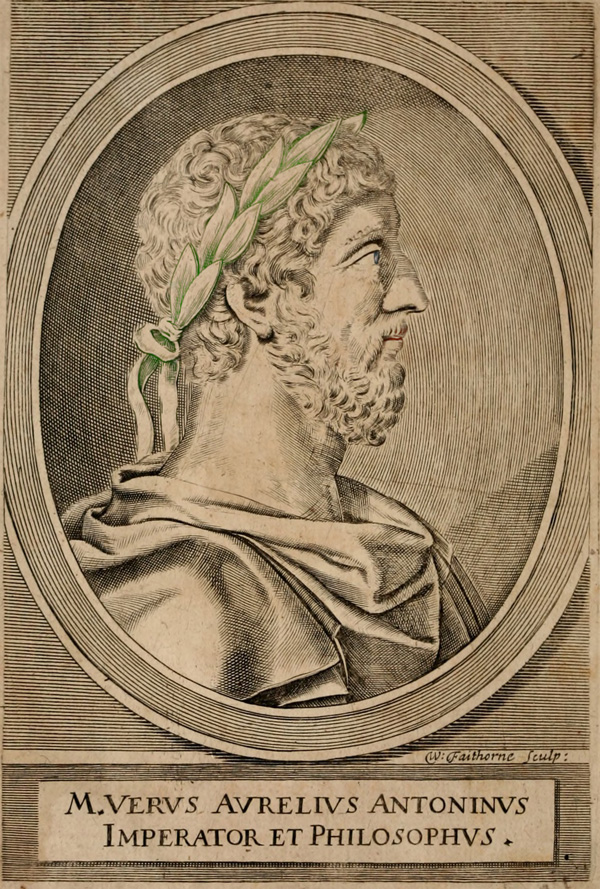
Aurelius, translated here by Gregory Hays, considers how befriending this eternal interplay of life and death can inform and ennoble our existential priorities:
Just that you do the right thing. The rest doesn’t matter.
Cold or warm.
Tired or well-rested.
Despised or honored.
Dying … or busy with other assignments.Because dying, too, is one of our assignments in life. There as well: “to do what needs doing.”
In another meditation, he revisits the question of our inescapable impermanence:
We find ourselves in a river. Which of the things around us should we value when none of them can offer a firm foothold?Like an attachment to a sparrow: we glimpse it and it’s gone.And life itself: like the decoction of blood, the drawing in of air. We expel the power of breathing we drew in at birth (just yesterday or the day before), breathing it out like the air we exhale at each moment.

Art from Candy Chang’s project Before I Die
With breath-stopping simplicity, Aurelius crystallizes the inevitable and indiscriminate nature of this inhale-exhale cycle that is life:
But rather than being dispirited by this awareness, he suggests, we can find it in an enlivening force of moral solidity in the face of our ephemeral existence:
We have to go there too, where all of them have already gone:… the eloquent and the wise — Heraclitus, Pythagoras, Socrates …
… the heroes of old, the soldiers and kings who followed them …
… the smart, the generous, the hardworking, the cunning, the selfish …
… and even [those] who laughed at the whole brief, fragile business.All underground for a long time now.And what harm does it do them? Or the others either — the ones whose names we don’t even know?
From this he extracts the ultimate moral:
Meditations is a requisite read in its entirety — the kind that stays with you for a lifetime and rewards anew with each rereading. Complement it with Seneca, a fellow Stoic, on how to fill the shortness of life with greater width of aliveness and Bertrand Russell on the paradox of immortality.
Subscribe to:
Posts (Atom)